Parametric Insurance
Updated 16 November 2026
Parametric insurance represents a fundamental shift from traditional indemnity-based coverage to index-based protection. For insurance professionals, the distinction is clear: rather than compensating for a specific loss through a manual claims adjustment process, parametric policies pay out a pre-defined amount when a specific, measurable event occurs. These triggers—such as a wind speed threshold, a rainfall level, or a duration of cloud downtime—are verified by objective third-party data. This model eliminates the need for loss adjustment, providing immediate liquidity to the policyholder and reducing administrative costs for the insurer.
Bridging the Protection Gap
The relevance of parametric solutions has surged as carriers and reinsurers seek to address the global protection gap in climate and cyber risks. For MGAs and brokers, these products offer a way to cover risks that were previously considered uninsurable or subject to prohibitively high deductibles. Recent market data we have tracked suggests the parametric insurance market is forecast to reach $7.64 billion by 2031, growing at a 16.7% CAGR. This growth is underpinned by the increasing availability of high-resolution data from IoT sensors and satellites, which provide the objective triggers necessary for automated payouts.
Integration of IoT and Real-Time Data
Our recent coverage highlights a significant expansion in the variety of parametric triggers across diverse sectors. In the weather space, Vortex Weather Insurance has launched automated solutions for snow, rain, and hail, while Descartes Underwriting and Generali have renewed their partnership to scale climate-related innovations. The technology is also moving into the digital realm; AIG recently launched a parametric cloud outage solution to mitigate business interruption risks, and Mantas emerged from stealth to focus on similar coverage.
In the travel and logistics sectors, automation is becoming the standard. Blink Parametric has expanded its flight delay services through partnerships with Medavie Blue Cross and Zurich Indonesia, while Otonomi, Tag-N-Trac, and Solent have introduced TRACinSURED for cargo protection using IoT sensors. Even niche environmental risks are being addressed, such as Lender Environmental Diligence’s LP3 product for pollution risk in commercial real estate. From coral reef restoration projects by WTW to earthquake solutions from Liberty Mutual Reinsurance and Safehub, the sector is moving toward a model of near-instant financial resilience.
This page tracks the evolution of index-based triggers, new product launches, and the technological partnerships defining the parametric landscape.
Video interviews
 Insurtech Alert: AI Distribution, Real‑Time Auto Insurance, Parametric Growth & Major Funding Rounds 18 August 2026
 Previsico on the Next Era of Flood Intelligence for Insurers 18 February 2026
 Insuring the Cyber Security Risk | CRC Insurance | FF Virtual Arena #338 28 October 2024
 Insurtech Insights 2022 with Stephen Lathrope, ICEYE 11 April 2022
Latest Parametric Insurance news
 Lender Environmental Diligence Launches LP3: A Parametric Solution for Commercial Real Estate Pollution Risk 29 October 2026
Lender Environmental Diligence has launched LP3, a parametric insurance product that protects commercial lenders against pollution risk and default, offering a 2-3 day alternative to traditional… FM Expands Alternative Risk Transfer Suite with Parametric and Captive Cell Solutions 14 October 2026
FM has expanded its alternative risk transfer suite, adding parametric insurance, structured risk, and captive cell solutions to provide clients with greater financial flexibility and resilience. Vortex Weather Insurance Launches Parametric Snow Guide to Stabilize Commercial Winter Budgets 14 October 2026
Vortex Weather Insurance has launched a new guide for brokers to implement parametric snow coverage, helping businesses protect budgets against unpredictable winter weather volatility. PCRIC and UNDRR Forge Landmark Alliance to Bolster Pacific Disaster Resilience 13 October 2026
PCRIC and UNDRR have signed a Letter of Cooperation to integrate disaster risk financing and parametric insurance into the Pacific's climate resilience strategy through 2030. TRACinSURED: Otonomi, Tag-N-Trac and Solent Launch AI-Powered Parametric Cargo Protection 8 October 2026
Otonomi, Tag-N-Trac, and Solent have launched TRACinSURED, a parametric cargo insurance program using IoT sensors to trigger automatic, rapid payouts for shipping delays and damage. Vortex Weather Insurance Launches Automated Parametric Rain Quotes for Kentucky Businesses 7 October 2026
Vortex Weather Insurance has launched instant, automated rain insurance quotes for Kentucky businesses, overcoming complex local tax hurdles to provide rapid parametric coverage. IDRIMA Advocates for Parametric Insurance to Shield Africa’s Hydropower Revenues 16 September 2026
IDRIMA has released a paper advocating for parametric insurance to protect African hydropower utilities from revenue losses caused by climate-driven hydrological variability and drought. Descartes and Generali Renew Global Partnership to Scale Parametric Insurance Innovation 8 September 2026
Descartes Underwriting and Generali GC&C have renewed their partnership to scale parametric insurance solutions, using AI and satellite data to provide rapid financial relief for climate-related… Medavie Blue Cross Launches Parametric Flight Delay Service for Canadian Group Plans 26 August 2026
Medavie Blue Cross has launched an automated Flight Delay Service powered by Blink Parametric, providing real-time lounge access and hotel compensation for Canadian group plan members without a… Blink Parametric Expands Real-Time Flight Delay Service to Medavie Blue Cross Group Members 25 August 2026
Medavie Blue Cross has expanded its partnership with Blink Parametric to provide group members with an automated Flight Delay Service that triggers instant payouts and lounge access without a claims… MIC Global and inDrive Scale Parametric Insurance Partnership to 18 Countries 21 August 2026
MIC Global and inDrive have expanded their parametric micro insurance partnership to 18 countries, providing automated trip-level medical and accident coverage for gig economy drivers and passengers. Vortex Weather Insurance Launches Automated Parametric HailSafe Solution to Close Commercial Coverage Gaps 21 August 2026
Vortex Weather Insurance has launched HailSafe, a nationwide parametric insurance solution that provides automated, trigger-based payouts for commercial hail damage to bridge rising deductible gaps. Liberty Mutual Reinsurance and Safehub Launch Parametric Earthquake Solution for Fast Payments 14 August 2026
Liberty Mutual Reinsurance and Safehub have launched a parametric earthquake insurance solution that uses the Safehub Shake Network to trigger fast payments based on real-time sensor data. AIG Launches Parametric Cloud Outage Solution to Mitigate Business Interruption Risks 14 August 2026
AIG has launched a Parametric Cloud Outage Solution in the U.S. to provide rapid payouts for cloud downtime, featuring a two-hour waiting period and no monetary retention for eligible cyber insurance… Parametric Insurance Market Set to Reach $7.64B by 2031 Driven by IoT and Satellite Tech 12 August 2026
The parametric insurance market is forecast to reach $7.64 billion by 2031, growing at a 16.7% CAGR as IoT and satellite data enable automated, trigger-based payouts for climate and disaster risks. WTW and Caribbean Biodiversity Fund Launch Innovative Coral Reef Parametric Insurance 7 August 2026
WTW and the Caribbean Biodiversity Fund have launched a parametric insurance policy that triggers immediate payouts for coral reef restoration following major hurricane events in the Caribbean. Colombia Protects 14,000 Smallholder Farmers with $20M Parametric Insurance Rollout 6 August 2026
Colombia has implemented five parametric insurance policies providing $20.14M in coverage for 14,402 smallholder farmers to mitigate drought and rainfall risks ahead of El Niño. How Parametric Insurance is Accelerating Global Climate Resilience and Faster Payouts 22 July 2026
Parametric insurance is expanding global climate resilience by using data-driven triggers to provide near-instant payouts, bypassing traditional claims delays for faster disaster recovery. Sensible Weather and TCP Insurance Launch Parametric Weather Protection for Film and Media Crews 13 July 2026
Sensible Weather and TCP Insurance have launched a parametric weather protection product for the media industry, providing automated cash reimbursements for outdoor production delays without a claims… Adaptive Insurance Secures $5M to Close the $181 Billion Global Climate Protection Gap 7 July 2026
Adaptive Insurance raised $5M to expand its AI-driven specialty insurance platform, addressing a $181B global climate protection gap through parametric products like GridProtect. Vortex Weather Insurance Unveils Plug-and-Play Toolkit to Simplify Parametric Sales for Brokers 1 July 2026
Vortex Weather Insurance has launched a free Broker Weather Coverage Toolkit, providing commercial brokers with white-label sales assets and training to simplify the sale of parametric weather… Dominican Republic Launches First Parametric Insurance for Climate-Vulnerable Households 30 June 2026
The Dominican Republic has integrated parametric insurance into its social protection system to provide rapid financial support to 3,030 households during extreme weather events.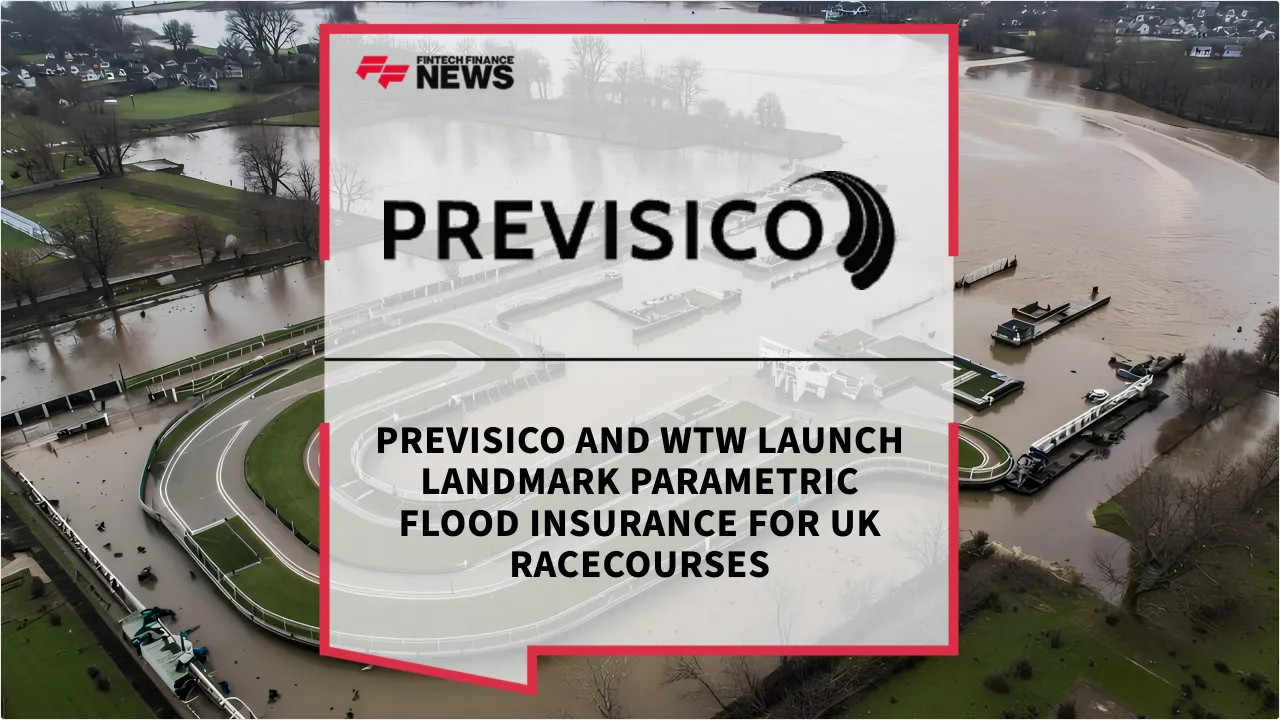 Previsico and WTW Launch Landmark Parametric Flood Insurance for UK Racecourses 22 May 2026
Previsico, WTW, Descartes, and Generali have launched a parametric flood insurance solution for UK racecourses using IoT sensors to trigger automatic payouts for high-risk properties. Lagos State Goes Live with Parametric Flood Insurance Policy, Protecting up to 4 Million People 26 March 2026
 Ecuador Contracts First Parametric Insurance for Climate-vulnerable Farmers, with Germany, UNDP, ISF and IDF support 23 February 2026
 Mantas Emerges From Stealth With Funding Round to Insure Cloud Downtime With Parametric Coverage 27 January 2026
 Bold Penguin Adds Parametric Insurance Coverage Through Partnership with Adaptive 8 December 2025
Bold Penguin has partnered with Adaptive Insurance to launch GridProtect, providing agents with AI-powered parametric coverage that triggers automatic payouts for business power outages. Parametrix Policyholders’ AWS Outage Claims Already Paid 2 December 2025
Parametrix has initiated payments for claims resulting from the Oct 20 AWS outage, delivering liquidity to affected businesses within two weeks via its data-driven parametric insurance model. Vortex Weather Insurance Launches Direct Access to Snow Risk Policies 17 September 2025
Vortex Weather Insurance has launched direct access to parametric snow risk policies, allowing businesses to insure against financial losses caused by both excessive snowfall and snow deficits. Weather Protection at Agents' Fingertips: Vortex Partners with First Connect 11 September 2025
Vortex Weather Insurance has partnered with First Connect to offer parametric weather policies to thousands of agents, featuring automated claims and payouts for rainfall and hurricane events. Mantas Secures In-Principle Approval for Category 4 Licence in the UAE 18 August 2025
Mantas secured In-Principle Approval for a DFSA Category 4 licence, paving the way for it to launch as the MEA region's first parametric MGA focused on cloud downtime insurance. RainSure Breaks New Ground: Insurance That Pays Out Starting at .01 Inches of Rain 14 August 2025
Vortex Weather Insurance has launched RainSure, a parametric insurance product that pays out incrementally starting at just .01 inches of rain, removing traditional all-or-nothing payout thresholds. Datos Insights Expands Insurance Advisory Capabilities with Acquisition of InsTech 3 August 2025
Datos Insights has acquired London-based InsTech to combine US data analytics with UK insurance innovation, focusing on parametric insurance and cross-border advisory. CelsiusPro Group and Corp-EFF Insurance Company Limited, Deepen Relationship by Widening Access to Parametric Hurricane Protection 29 July 2025
CelsiusPro and Corp-EFF have expanded their parametric hurricane protection programme, providing USD 4.7m in capacity to ensure rapid payouts for Caribbean MSMEs and farmers ahead of the 2025 season. Floodbase Launches Next-Generation Continuous Flood Mapping, Unlocking Flood Event Actions Anywhere, Anytime Across the U.S. 22 July 2025
Floodbase launched next-generation AI flood mapping providing continuous, near-real-time data across the U.S. to accelerate disaster response and parametric insurance payouts. IDF Insurance Team Delivers Tripartite Programme Parametric Flood Insurance Solution for Lagos State Government 16 July 2025
Lagos State and the IDF have finalized a parametric flood insurance solution providing $7.5M in coverage to protect 4 million residents from climate-related disasters using satellite-triggered… CelsiusPro Group Hires Team From WTW Climate and Resilience Hub to Strengthen Disaster Risk Finance Capabilities 6 April 2025
CelsiusPro Group has hired a specialist Disaster Risk Finance team from WTW to join its Climate Resilience Solutions division, enhancing its parametric insurance capabilities for the Global South. Yokahu Launches cat-risk.com: The First Independent Parametric Exchange to Transform Disaster Risk Finance 18 March 2025
Yokahu has launched cat-risk.com, the first independent parametric exchange. It connects brokers and carriers to automate disaster risk finance, offering payouts in as little as 48 hours. Previsico and Descartes Partner to Deliver Superior Coverage of Corporate Flood Risk 17 January 2025
Previsico and Descartes have partnered to offer businesses in the UK and Ireland IoT-triggered parametric flood insurance with payouts issued within days and coverage up to $70 million per policy. Blink Parametric Launches Flight Disruption ‘FlyEasy’ Travel Proposition With Zurich Indonesia and Zurich Edge 3 January 2025
Blink Parametric and Zurich Indonesia have launched 'FlyEasy,' a parametric insurance solution providing instant VIP lounge access to travelers facing flight delays of two hours or more.
Companies in Parametric Insurance
- Blink Parametric 11 stories
- Vortex Weather Insurance 7 stories
- Insurance Development Forum 6 stories
- Anansi 4 stories
- FloodFlash 4 stories
- Descartes Underwriting 3 stories
- Generali UK 3 stories
- MAWDY 3 stories
- United Nations Development Programme (UNDP) 3 stories
- Adaptive Insurance 2 stories
- Arbol 2 stories
- Canassurance Insurance Company 2 stories
Frequently asked questions
What is parametric insurance and how does it differ from traditional cover?
Parametric insurance is a type of coverage that pays out based on the occurrence of a specific event trigger rather than the actual physical loss sustained. Unlike traditional indemnity insurance, which requires a lengthy claims adjustment process to quantify damages, parametric policies use objective data—such as wind speed or earthquake magnitude—to trigger automatic payments. This provides policyholders with rapid liquidity and reduces administrative overhead for insurers.
How does the payout process work in parametric insurance?
The payout process is typically automated through data feeds from IoT sensors, satellites, or official agencies. When a pre-defined threshold is met, the system triggers a payment. For example, Blink Parametric provides automated flight delay compensation for Medavie Blue Cross members, while Liberty Mutual Reinsurance and Safehub use sensor networks to trigger earthquake payments. This removes the need for policyholders to file manual claims or prove specific losses.
Who are the main providers of parametric insurance solutions?
The market includes specialized underwriters like Descartes Underwriting and Vortex Weather Insurance, alongside major carriers such as AIG, Generali, and Liberty Mutual. Technology providers like Blink Parametric and Previsico play a critical role in providing the platforms and sensor data required for triggers. Additionally, brokers such as WTW and Bold Penguin are increasingly integrating parametric products from providers like Adaptive Insurance into their commercial offerings.
What are the primary risks covered by parametric products?
Parametric products are most common in climate and catastrophe risk, covering events like hurricanes, floods, and droughts. However, the scope is expanding. AIG and Mantas offer coverage for cloud outages, while Otonomi provides cargo delay protection. In the travel sector, Blink Parametric covers flight disruptions. Other niche applications include WTW’s coral reef restoration insurance and Lender Environmental Diligence’s solutions for commercial real estate pollution risks.
How is parametric insurance priced and adopted by the market?
Pricing is driven by actuarial modelling of historical data and the probability of a trigger event occurring. Adoption is growing rapidly, with the market forecast to reach $7.64 billion by 2031. It is increasingly used by governments for disaster resilience, such as in Colombia and the Dominican Republic, and by commercial entities to bridge deductible gaps, as seen with the HailSafe solution from Vortex Weather Insurance.